GET AQUOTE

Sectors:
Marine

Shipbuilding and marine fabrication involve complex, high-consequence welding across structural, pressure and specialist applications. NECIT's welding certification and inspection expertise supports shipyards, marine fabricators and offshore marine contractors worldwide.

Marine and offshore structures operate at the intersection of immense hydrostatic pressure, aggressive saline corrosion, and relentless dynamic loading—conditions that make weld integrity and structural certification entirely non-negotiable from keel to topside. NECIT provides UKAS-accredited technical oversight and advanced non destructive testing methods across hull construction, propulsion systems, offshore platforms, FPSO vessels, and subsea infrastructure.


Working to the exacting standards of DNV, Lloyd's Register, Bureau Veritas, and other international classification societies, we ensure compliance at every level. From new-build fabrication through to in-service structural integrity assessments, our inspectors place certified eyes on the components that protect crews, cargo, and capital assets in the world's most hostile maritime environments.



Defending Hull Integrity Against Extreme Pressures

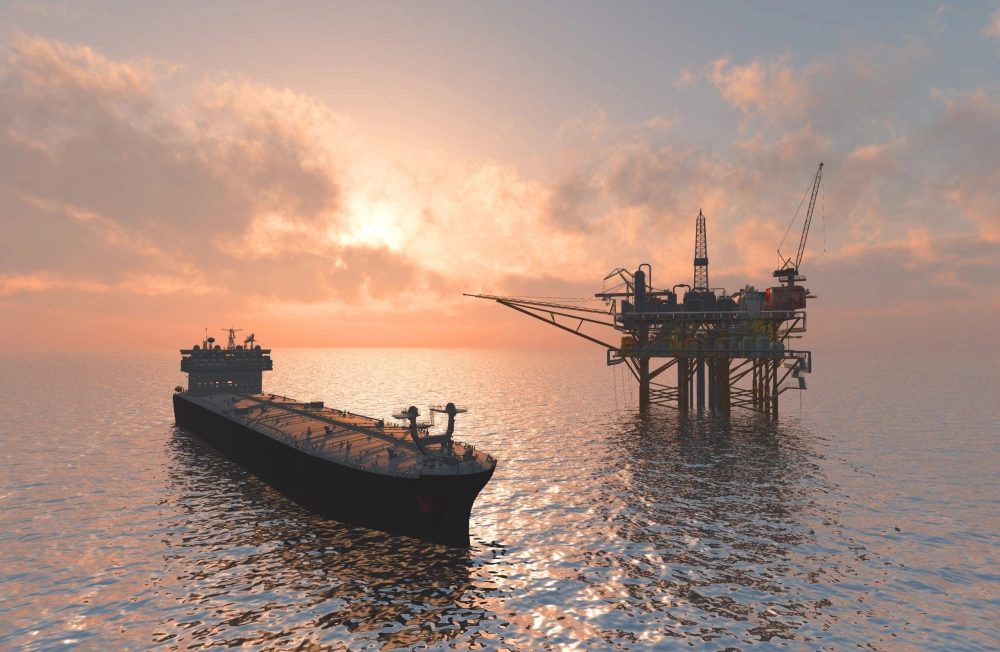
The primary line of defense for any vessel or offshore asset is its hull. Ships and submarines must withstand crushing hydrostatic pressure and the violent twisting forces of open-ocean waves. A single sub-surface defect in a critical weld seam can rapidly propagate under this constant cyclic loading, compromising the water-tightness and structural strength of the vessel.

Utilising advanced NDT methods such as ultrasonic mapping and high-precision magnetic particle inspection ensures that these high-stress joint configurations possess the flawless structural continuity required to survive severe sea states.
 

Seawater Defence & Corrosion Monitoring

The marine environment is a catalyst for rapid material degradation. Saltwater is relentlessly corrosive, making aggressive corrosion monitoring an operational necessity.


  • Ballast Tanks and Engine Rooms: These internal areas are constantly under attack by salt and moisture. Regular inspections monitor "pitting" and detect the gradual thinning of metal before it leads to a catastrophic breach.
  • Propulsion and Subsea Infrastructure: High-velocity fluid environments accelerate erosion-corrosion at weld joints, demanding highly precise, certified oversight and repeatable non destructive testing methods to map material loss.

Why Marine Clients Choose NECIT

  • UKAS-accredited inspection body - independently verified competence, not just ISO certification
  • Global inspector network of over 3,000 qualified professionals


  • International standards expertise - ISO, ASME, API, NACE, BS EN and client-specific requirements
  • Digital inspection reporting - through INSPEKTA-GADGET, our proprietary inspection management platform

Securing Class Certification & Compliance

In commercial shipping and offshore energy, independent validation is the gateway to global operations. Achieving Class Certification from recognised inspection bodies is a mandatory prerequisite for securing asset insurance and gaining entry into international ports.


By delivering robust, traceable inspection documentation, certified third party inspection from NECIT Services transforms risk management. It gives vessel owners, underwriters, and regulatory authorities absolute confidence that maritime assets are structurally sound, environmentally compliant, and built to endure the open sea.


Non-Destructive Testing (NDT) for Marine


NECIT is a UKAS-accredited Non-Destructive Testing inspection body, providing independent assurance that your test results are credible and defensible. Our UKAS-accredited NDT services used in the marine sector include:


  • Phased array ultrasonic testing (PAUT) — advanced weld and corrosion assessment
  • Magnetic particle inspection (MPI) — surface and near-surface crack detection
  • Ultrasonic testing (UT) — wall thickness measurement and flaw detection
  • Hardness testing — material verification for process equipment
  • Visual inspection (VT) — by qualified Level 2 and Level 3 technicians


Inspection Data You Can Trust and Trace
 

In the marine sector, inspection documentation isn't an afterthought, it's evidence. NECIT's proprietary INSPEKTA-GADGET platform gives clients real-time visibility of every inspection activity, from initial vendor audit through to final release.
 

Every action, finding and sign-off is timestamped and traceable. Reports are available as they happen, not days later. With full documentation centralised in one secure location, accessible from your office, site or operations centre.

Frequently asked
What does ABS welding certification involve for maritime vessels and offshore structures?
An ABS welding certification proves compliance with the strict maritime codes of the American Bureau of Shipping. Shipyards must pass an extensive welding examination to show that their welding materials, operator techniques, and joint configurations can withstand corrosive marine environments.
Frequently asked
How does NECIT conduct subsea umbilical testing to ensure marine system reliability?
NECIT provides specialised subsea umbilical testing to confirm the power, signal, and fluid transmission performance of deep-water marine conduits. Our team executes precise umbilical testing procedures alongside field umbilical cable inspections to ensure components function perfectly at extreme ocean depths.
Frequently asked
What are the steps for evaluating a complex umbilical termination in subsea assets?
Evaluating an umbilical termination requires verifying its load-bearing connections and high-pressure fluid seals. Specialised personnel filling umbilical inspector jobs verify these terminations against strict offshore specifications, preventing deep-water leaks and environmental containment losses.
Frequently asked
Which NDT techniques are used to assess ship hull plate integrity under marine conditions?
Marine survey teams select surface and volumetric NDT techniques based on marine biofouling and plate thickness. Enforcing a strict non destructive control plan allows surveyors to monitor hull plate thinning, identifying internal pitting before moisture compromises watertight boundaries.
Frequently asked
Why is a welder performance qualification certificate required for marine pressure welding?
Marine plumbing, fuel lines, and steam systems operate under immense stress. Requiring every operator to hold a valid welder performance qualification certificate ensures high quality across all onboard piping systems. Validating each welders qualification minimises the risk of structural failures while at sea.